
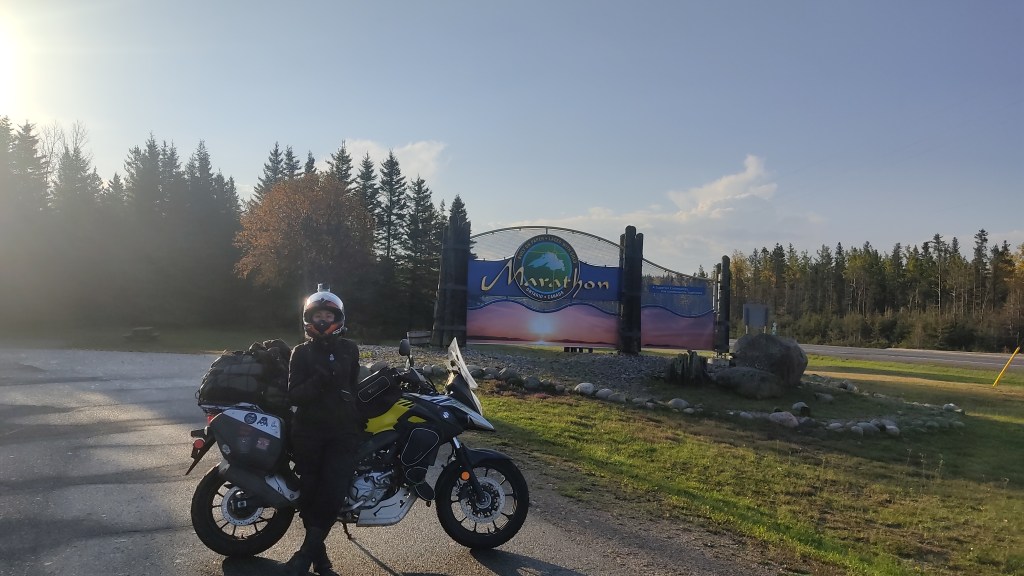
A roadtrip is not only getting amazed by wonderful landscapes and the freedom which goes along. It is also an opportunity to discover a culture ; a history ; whether told by the people who live there, or by the monuments still standing and maintained, or even by the geological formations that have been preserved and documented. Canada, as we know it today, is considered a young country. I heard it many times. Yet this land was shaped thousands of years ago and inhabited by different peoples down the ages. This is what I discovered after 30,000 kilometers of motorcycling.
In this sixth episode of the Canadian History & Culture series, let’s take some time to visit Ontario.
Ah, Ontario, the province with the largest population, where Ottawa, the federal capital, and Toronto, the provincial capital, clash. The country’s political heart versus its economic heart. The family town versus the busy megalopolis. In Ottawa, you can’t wait to get your picture taken in front of the Parliament, which is as much talked-about as the Elysée Palace; but you can also skate on the Rideau Canal in the middle of winter and enjoy a Beaver tail (a pastry, not a real one obviously) with some hot chocolate bought at the Byward Market. In Toronto, we visit the CN Tower for an impressive view of the “Canadian Hollywood”; we buy a ticket to cheer on the Blue Jays or the Maple Leafs; and we end up exhausted after wandering through each neighborhood to discover every facet of the city. And its cultures.
So, when we think of Ontario, we think mainly of these two cities. And Niagara Falls. We rarely think of Kenora, a city bordering Manitoba, famous for the thousands of lakes that surround it. We rarely think of Manitoulin Island, the world’s largest freshwater island. We also rarely think of Sault-Saint-Marie, Thunder Bay and all the other municipalities, large and small, that have played major roles in North American history and economy. And we forget so many places with breathtaking natural riches, which look like a postcard: Bruce Peninsula, Algonquin Park, Quetico Provincial Park, the Highlands region, the list goes on.
A visit to Ontario means taking your time. The maxim applies to the whole of Canada, whose size invites slow tourism: you can easily alternate between city and hinterland, and walk at the crossroads of the various cultures that have forged the province. If you’d like to get off the beaten track, here are three itineraries for a different experience in Ontario.
Algonquin Park, Highlands and Georgian Bay
Famous for bikers, Ontario’s Highlands give an unrivalled flavour to your ride. The curves are endless. The hairpin bends will surprise you. The dense forests, adorned with an orange-red-yellow triptych in autumn, will plunge you into a fairytale world. Many motorcyclists have tried it and many have returned again and again. Riding in the Highlands means planning a multi-day escapade, with unmissable stops to marvel at culture and nature. As you pass through Algonquin Park on Highway 60, you’ll no doubt want to stop and learn more about the park’s history and understand what makes it so famous. Shortly after Dwight, you can turn off the suggested route onto Highway 35, towards the Dorset Tower.
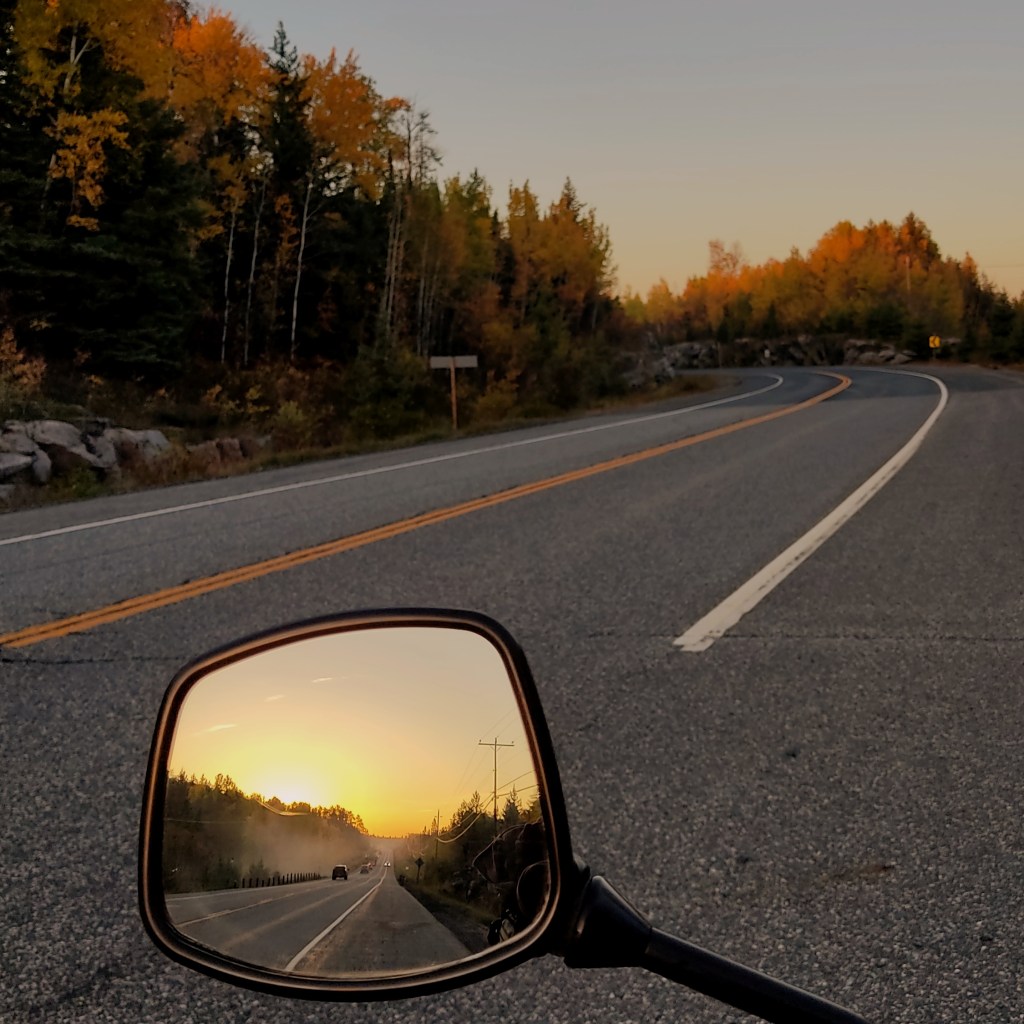
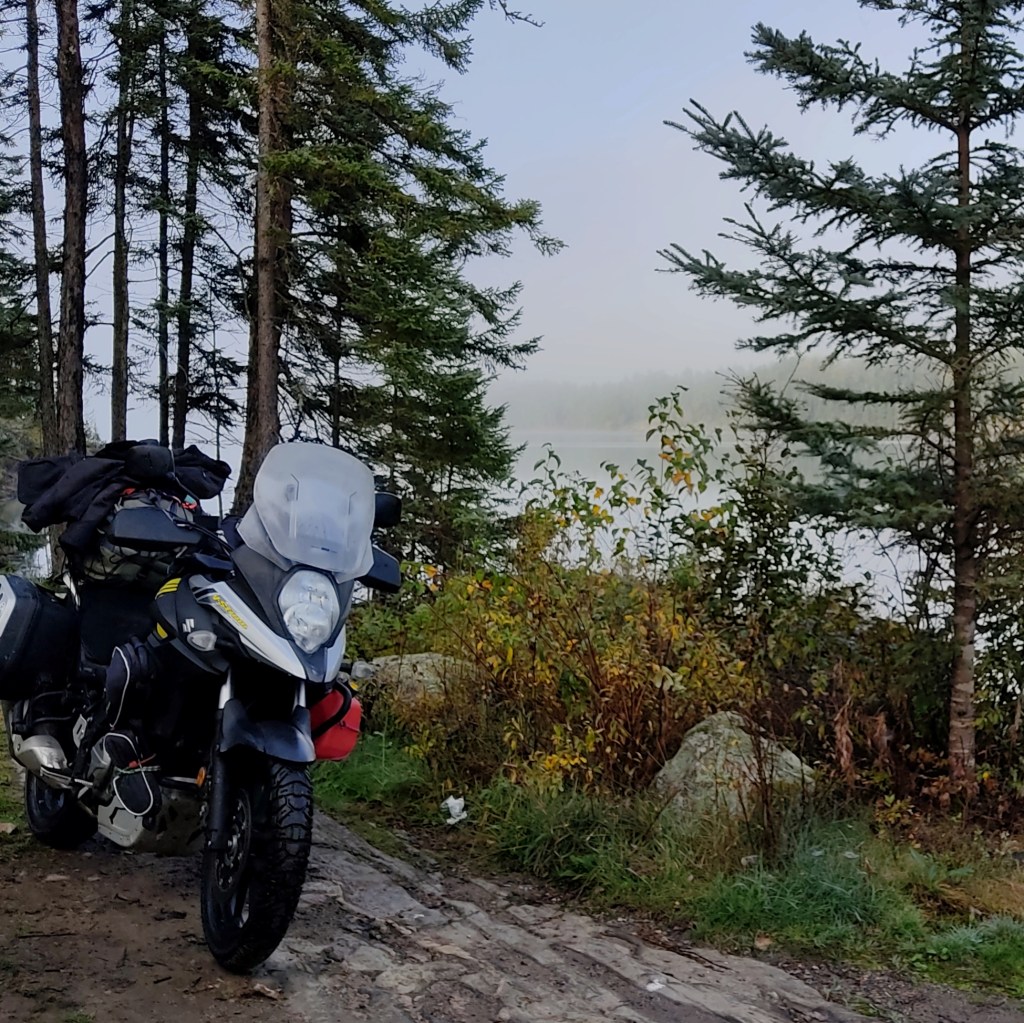
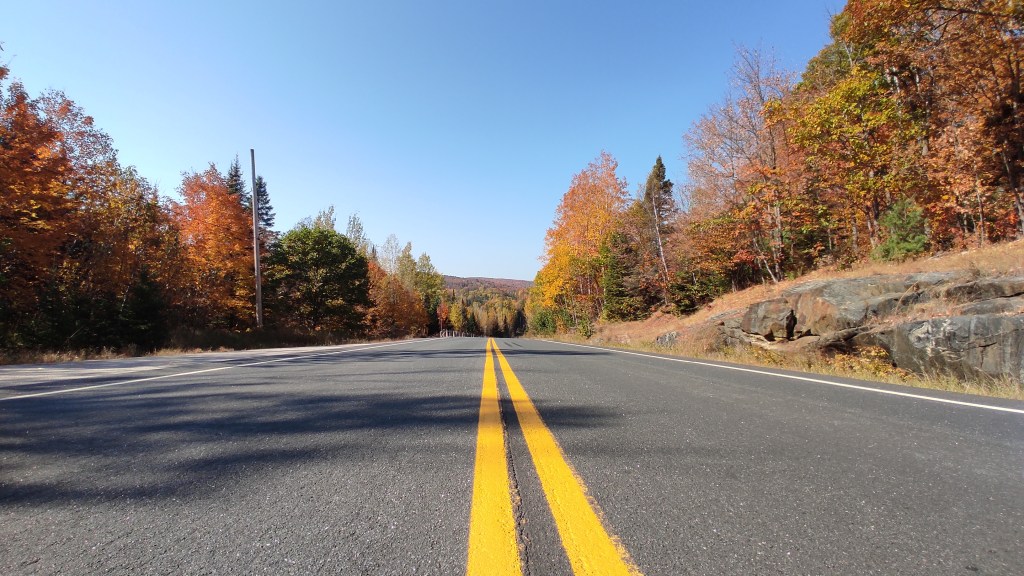
The view over Lake of Bays is well worth the effort! Between Smith Falls and Perth, if you’re not too keen on passing through Kingston, you can continue on Highway 7 and make a mini-tour of the Black Forty cheese factory. Its reputation is undisputed, and when you’re craving cheese, you’ll be glad you stopped by. While we’re on the subject of treating ourselves with some nice gourmet break so that I can get some google traffic, let me say that Quebec is not the only place where you’ll find a wide variety of craft beers. Throughout this journey, you can add several stops at microbreweries: Dog House Brewing Company, Calabogie Brewing Company Boshkung Brewing Company, to name but a few. When you reach the western end of this route, you’ll enter another world: that of the lakes, with a window onto Georgian Bay. If you decide to stop before continuing your loop, you can enjoy the immensity of the lake, the rugged relief of the bay and, even, enjoy a tour of the 30,000 Islands. It’s hard to choose, but we told you: take your time. The route covers just over 1,000 kilometers, the equivalent of crossing France from North to South.
Bruce Peninsula and Manitoulin Island
Did you know that Manitoulin Island, located in Lake Huron, is the world’s largest freshwater island? 180 kilometers long, 50 kilometers wide, no less! What’s more, it also boasts three major lakes with…islands! Lakes within a lake. Islands within an island. Fantastic, isn’t it? You can cross the island in less than two hours and stay only a day, but you can also fall in love with this unique place, the ancestral homeland of six nations: M’Chigeeng, Sheguiandah, Sheshegwaning, Aundeck Omni Kaning, Wiikwemkoong and Zhiibaahaasing. Today, First Nations make up nearly 40% of the island’s population. Head north on Highway 6 towards Lake Superior, while south on the ferry to Tobermory, you can continue to experience the magic of the Bruce Peninsula.
In Tobermory, you can enjoy the unique and almost incongruous experience of observing shipwrecks, as you’re just a stone’s throw from Fathom Five, a national marine park. While diving, you can see no less than 20 historic wrecks, schooners, barges and even motorboats. And if you’re more into wildlife or marine geology, the turquoise waters will delight you.
Before returning to Route 6, take the time to hike in Bruce Peninsula National Park, to admire Indian Head Cove and its white limestone rock. If you have the opportunity, continue along the lakeshore on Route 26 until you reach Wasaga Beach. It’s sure to be a change of scenery. If you’ve opted to take Route 21 along the west side of the lake, there are plenty of opportunities to enjoy the fine sandy beaches: Sauble Beach for the most touristy, Port Elgin for the most family-friendly, Lurgan Beach for the most confidential.
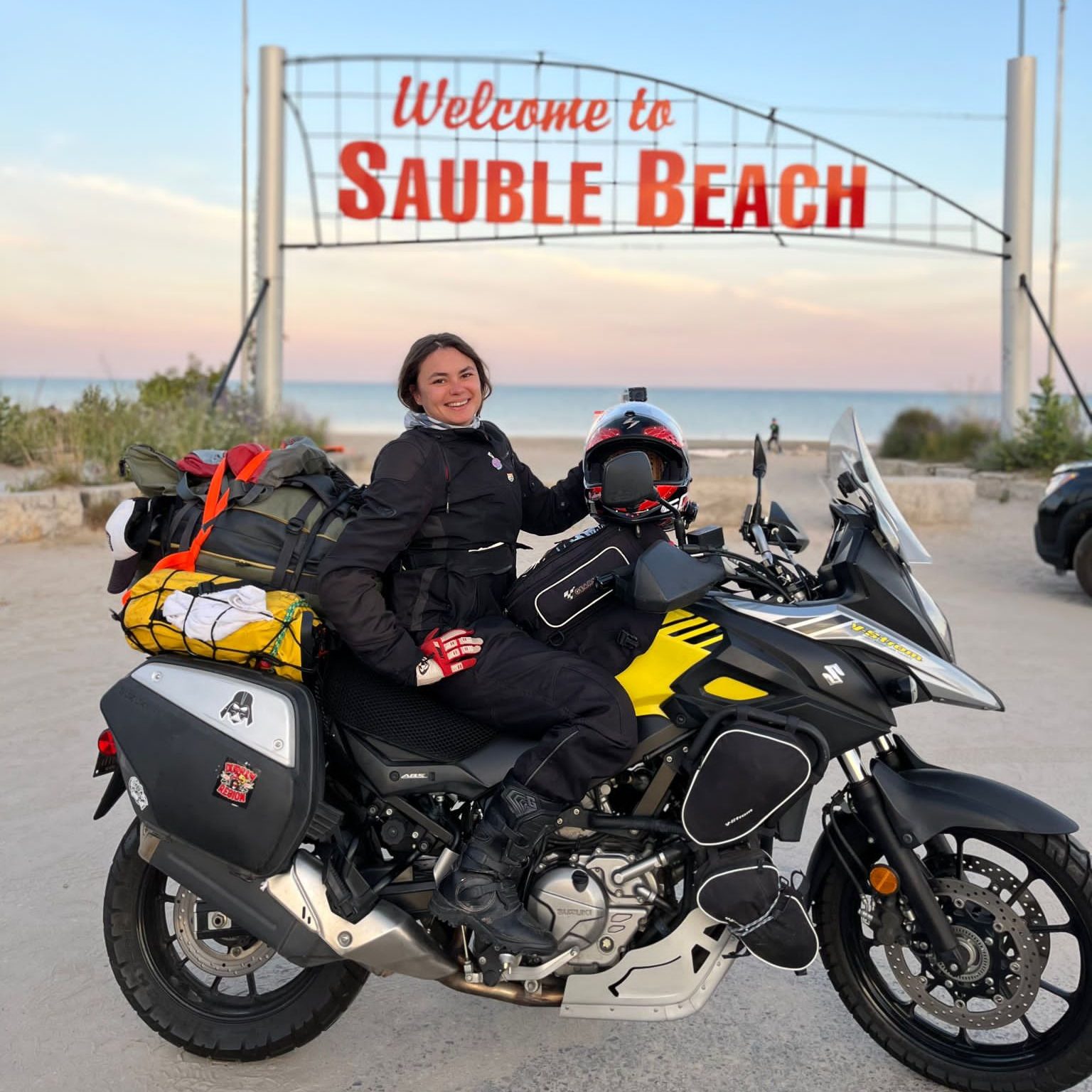
From Thunder Bay to Kenora, a loop between waterways and provincial parks
Another loop? When you have the opportunity to take two different routes, Highways 17 and 11, to cover an area the size of Switzerland, why deprive yourself? You’ll be taking two routes on the Trans-Canada Highway. While the first is shorter and more heavily trafficked, the second takes you almost out of time (this sentence should be put into Canadian context: don’t expect to be stuck at any point on Highway 17, you’ll simply have more trucks, which won’t stop you from swallowing up many kilometers without passing or overtaking anyone). Route 17 offers many vistas, but it’s Route 11 that really grabbed my attention. The stretch between Kenora and Nestor Falls is packed with twists and turns, making you appreciate every forest, lake and river you cross. Arriving in Fort Frances, you find yourself on the border with the United States. Take the time to visit this town with its distinct Francophone imprint. It was the first colony established west of Lake Superior, by an explorer from New France, Pierre Gaultier de Varennes, sieur de la Verendrye (I refer you to my article on Acadia to brush up on the territories of the time).

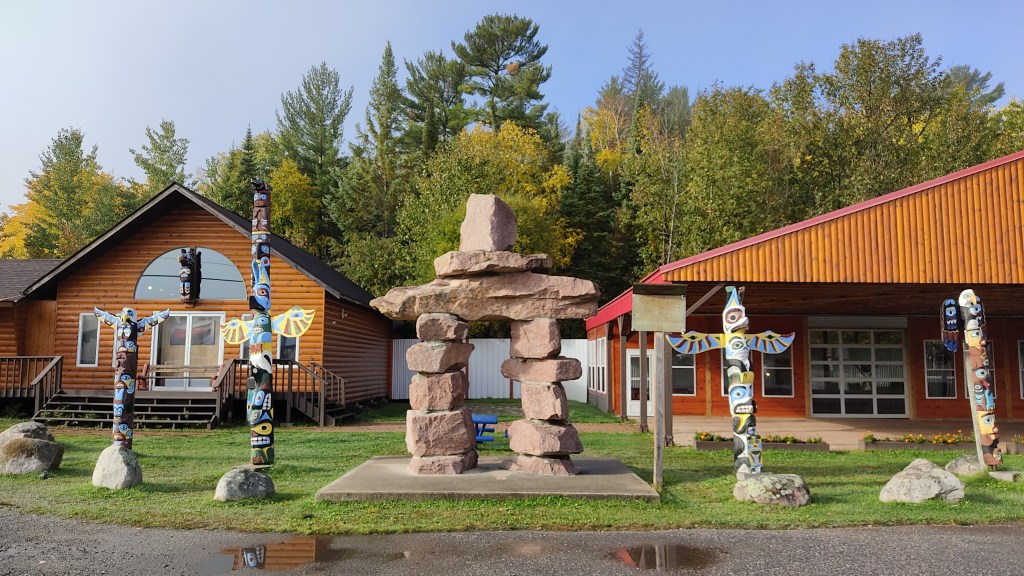
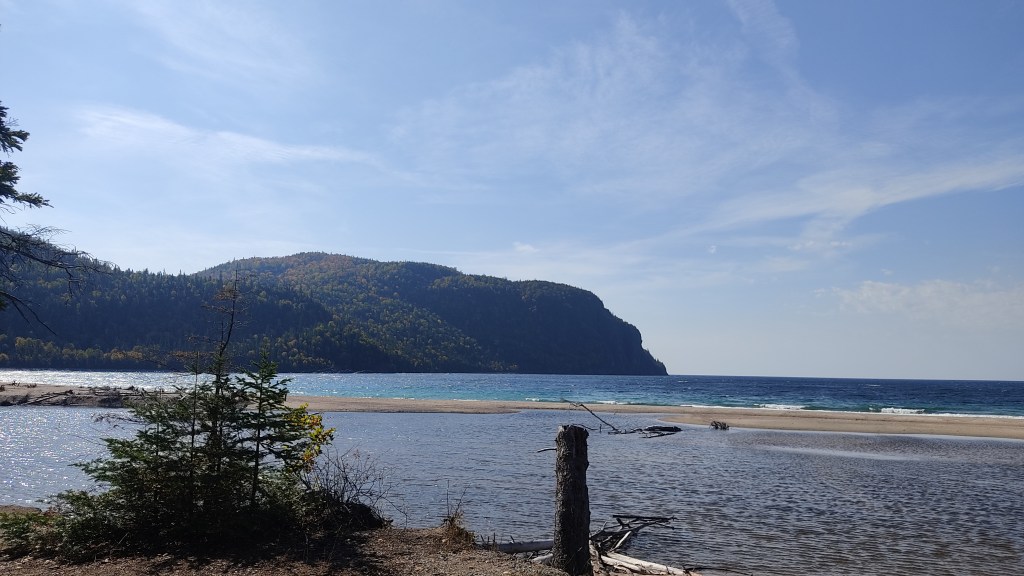
You’ll cross waterways again and again, and never tire of it, I promise. Shortly after Fort Frances, you’ll find numerous views of Rainy Lake. Near Thunder Bay, it’s impossible not to visit Quetico Provincial Park. Like the rest of the region, it’s made up of thousands of lakes, hiking trails and waterfalls – in short, an unspoiled nature reserve. And since we’ve mentioned the two major towns on this loop, Kenora and Thunder Bay, they’re not to be overlooked. Special mention must be made of the center of Kenora and Lake Anicinabe, whose campground was recommended to me. Even in the deluge, the place didn’t disappoint.
It’s hard to list the most beautiful places to stop, so much so that Ontario’s unique geography invites contemplation. And that’s not to mention the number of First Nations reserves you’ll pass through. If you’d like to find out more, we’ve got you covered.
| How do I get to Ontario? By land: From Montreal, you can reach Ottawa via the Trans-Canada Highway (2 hours) or opt for a scenic back road along the Ottawa River (3h50). If you’re heading for Toronto, allow 5.5 hours from Montreal (8 hours from Quebec City) via Highway 40, and be prepared for heavy traffic as early as an hour before Toronto. It’s best to park near Oshawa and take the bus or train downtown. By air: Toronto and Ottawa are the province’s two main airports, with worldwide connections. Depending on your point of origin or destination, you can also aim for Thunder Bay. By rail: With Via Rail, you can travel within the province, or set off on the great epic journey to or from Vancouver. By sea: If you’re a sailor at heart, this could be your chance to experience Ontario’s waterways. By taking the St. Lawrence Seaway, you’ll reach the north coast of Quebec and then the Atlantic. And since the great lakes – Lake Huron, Lake Superior, Lake Erie and Lake Ontario – are on the border between Canada and the United States, you can sail from one country to the other, subject to customs regulations, of course. You can also discover Ontario by kayak or canoe through the network of rivers, streams and canals. Getting around Ontario’s sheer size makes it ideal for cars, vans and motorcycles. From north to south, east to west, you’ll discover a diversity of landscapes you might not have expected. From the Ontario Highlands and Algonquin Park to the Thousand Islands, the Great Lakes and the north of the province – every road you take is a journey in itself. |
To find out more about tourism in Ontario, visit the official Tourism Ontario page.
For the article in French, click here.


Votre commentaire