
A roadtrip is not only getting amazed by wonderful landscapes and the freedom which goes along. It is also an opportunity to discover a culture ; a history ; whether told by the people who live there, or by the monuments still standing and maintained, or even by the geological formations that have been preserved and documented. Canada, as we know it today, is considered a young country. I heard it many times. Yet this land was shaped thousands of years ago and inhabited by different peoples down the ages. This is what I discovered after 30,000 kilometers of motorcycling.
In this seventh episode of our History & Culture of Canada series, here is why Manitoba is worth a visit.
Manitoba was introduced to me by fellow motorbikers, born and raised in the Province, now settled all over the country. Most were from the north, hundreds of kilometers from Winnipeg. A north where annual temperatures rarely exceed 20 degrees in summer and -30 in winter; where the northern lights are a regular sight; but a north where populations are scarce. Canada’s far north is not just the Yukon, Northwest Territories and Nunavut. It’s already accessible in Labrador and Quebec, as in Fermont. You only have to look at a map of Canada to realize just how much of the country is inhabited, or rather, uninhabited.
Manitoba is the fifth most populous Province in the country. Not surprisingly, half the population lives in Winnipeg, the provincial capital. On the way here, you’ll travel along hilly, sometimes mountainous roads, and if you’re not in a hurry, you may even pass between two lakes – The Narrows is a stretch of road that separates Lake Manitoba and Lake Winnipegosis, respectively the second and third largest lakes in the province, after Lake Winnipeg. The province is rich in history, as you can discover the progress of Europeans from the eastern Atlantic, their relations with the First Nations (not the best, but I’ll leave it to history teachers, descendants’ stories and museum sources to enlighten you further) and the cultural evolution of the various colonies.
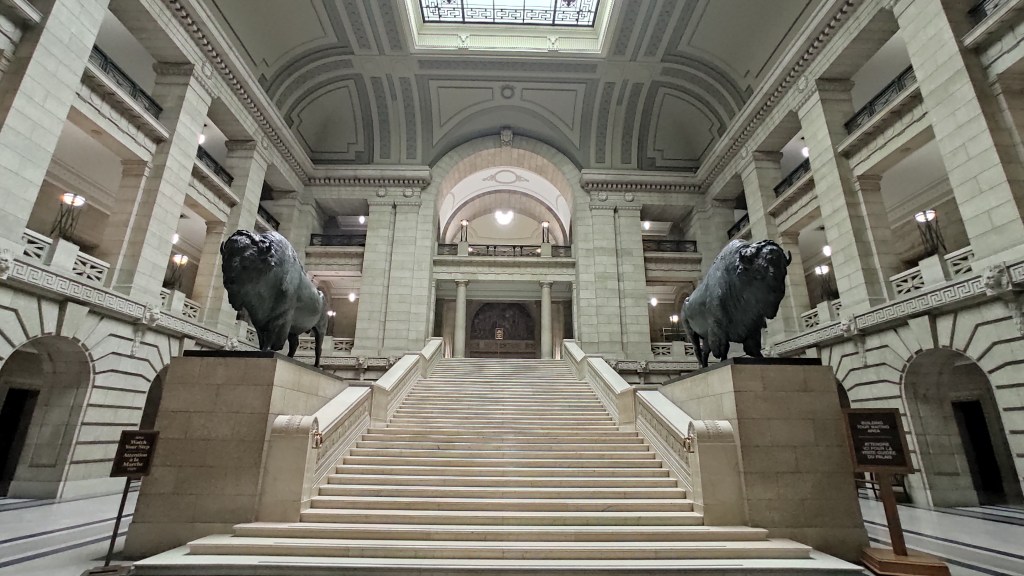
Fun fact: Manitoba’s emblem is a bison, and you can see it on the license plates of vehicles registered there. The bison was the animal that provided the needs of the First Nations: food, clothing and tools. Thousands grazed the province’s plains, but colonization almost wiped out the species. By the end of the 19th century, there were just a hundred or so. Two statues of the animal also frame the staircase of the Legislative Building (Manitoba Legislative Assembly) in Winnipeg. Legend says that their names are Mani and Toba. To be verified.
A Viking trail
In Manitoba, you can build your tour around the Viking theme. From the second half of the 19th century to the beginning of the 20th, almost a quarter of Iceland’s population fled a country with a flagging economy and extreme climatic conditions, to settle in North America. In Canada, Ontario initially welcomed the majority of settlers, before they headed further west, to Manitoba, to found New Iceland. In 1875, over 200 of them settled in Gimli, on the shores of Lake Winnipeg, in a reserve established under the Dominion Lands Act. Before prospering, the colony endured a harsh first winter and years of deadly contagious disease. But after these difficult beginnings and the increasing immigration of their compatriots, they were finally able to fully tame the land.
If you visit Gimli and head further North and West, towards Lake Manitoba, you’ll find it easy to understand the development of New Iceland. Numerous graves and commemorative sites will remind you of the exodus of these Icelanders and their desire to find a better future, far from the poverty of their homeland. Eriksdale, Vogar, Arborg – the names of rural communities that will transport you to another civilization.
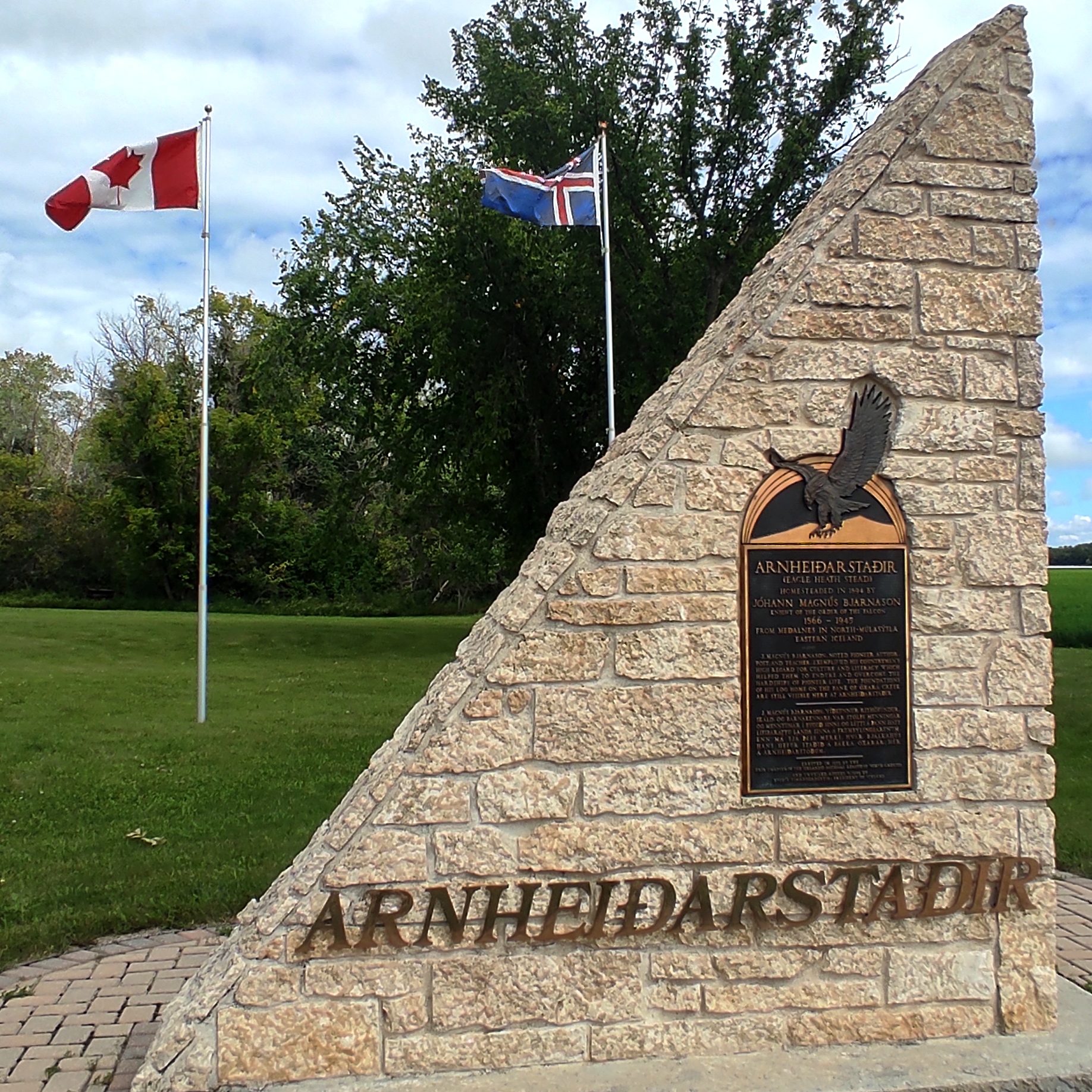
Riding Mountain, one of only two National Parks in Manitoba
One of the only two National Parks, and indeed the only mountain, is called Mount Riding. Here you’ll find lakes, beaches, forests and trails for hiking, biking and even horseback riding! Less than 300 kilometers from Winnipeg, it’s a popular summer and winter vacation spot. The largest lake is Clear Lake, located at the easternmost point of the Park, and as its name suggests, its water is crystal-clear. The scenery is spectacular, and you’ll never feel like you’re « on the Prairies » again.
Winnipeg, a multicultural city
Winnipeg is the capital of Manitoba. In 2023, the rising cost of living is taking its toll on the local population. Yet the city is well worth a visit. Situated at the confluence of the Red and Assiniboine rivers, it was of vital importance to the First Nations and later to the settlers. The Forks district is considered the epicenter of the town, with a covered market, restaurants and all types of commerce.
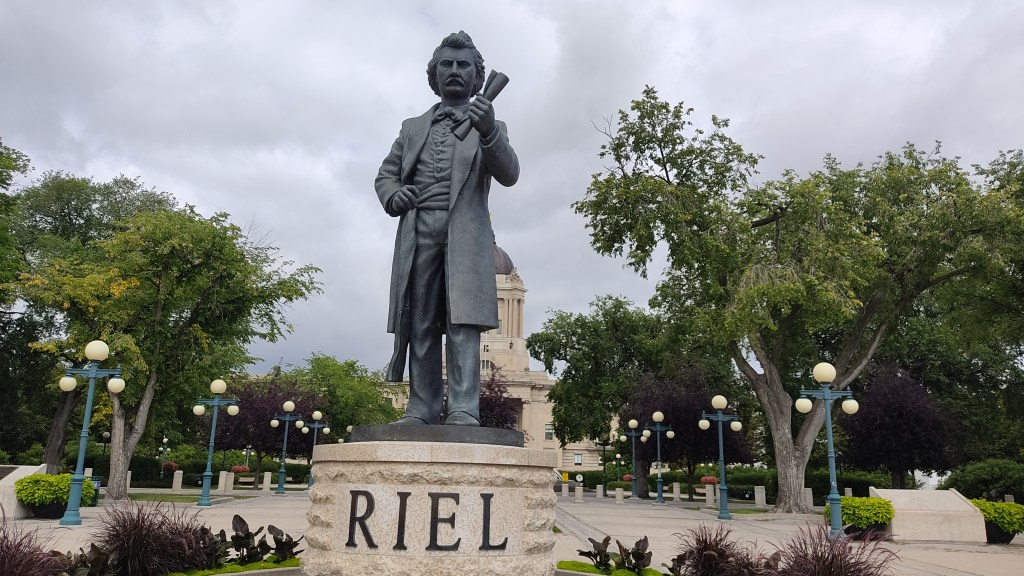
Several frescoes and engravings depict the city’s history, and strolling along the pedestrian walkways is a delightful way to discover this beating heart. Winnipeg is also home to the Canadian Museum for Human Rights, with its unique architecture. Although controversial in the past, and among the people who introduced me to it, it nevertheless deals with human rights issues around the world, and may be of interest to you. After you cross the Red River, you’ll welk into the Saint-Boniface district, one of the country’s oldest French-speaking neighborhoods. Colorful houses and a cathedral will delight you. Finally, a visit to the crossroads of many cultures naturally ends with a tasting of typical dishes: special mention goes to the Icelandic dessert Vinarterta, or Schmoo Cake, a Russian-influenced cake.

| How to get to Manitoba By land: Bordered to the east by Ontario, to the west by Saskatchewan, to the north by Nunavut, to the south by the United States; the province is largely accessible via the Trans-Canada Highway and its secondary roads. However, the further you travel from the Trans-Canada Highway, the more uneven the quality of the roads. Be prepared for a lot of gravel back roads. Fortunately, every summer brings its share of pavement resurfacing. By air: Winnipeg is Manitoba’s international airport. It serves numerous destinations around the world and within the country. It is also Canada’s 7th busiest airport. To get to the north of the country, you can land in Churchill and discover this community, nicknamed the « polar bear capital of the world ». By rail: In Manitoba, two railways will take you from one end of the province to the other, or from one province to the other: the Canadian National Railway (CN) and the Canadian Pacific Railway (CP). By sea: You may have thought that the Prairies didn’t rhyme with port, but they do. You will find one in Churchill, at the mouth of Hudson Bay. In fact, it’s the only Arctic seaport. It is connected to the Hudson Bay Railway. However, remember to book in advance, as the port is only accessible from July to October. Getting around: As in the other provinces of Canada, any means of road transport will enable you to enjoy the wide-open spaces that Manitoba has to offer. |
To find out more about tourism in Manitoba, visit the official Manitoba Tourism page.
 Julia on a bike
Laisser un commentaire