
A roadtrip is not only getting amazed by wonderful landscapes and the freedom which goes along. It is also an opportunity to discover a culture ; a history ; whether told by the people who live there, or by the monuments still standing and maintained, or even by the geological formations that have been preserved and documented. Canada, as we know it today, is considered a young country. I heard it many times. Yet this land was shaped thousands of years ago and inhabited by different peoples down the ages. This is what I discovered after 30,000 kilometers of motorcycling.
In this third episod of the Canadian History & Culture series, let’s go to Nova Scotia, the easternmost of the Maritime provinces.
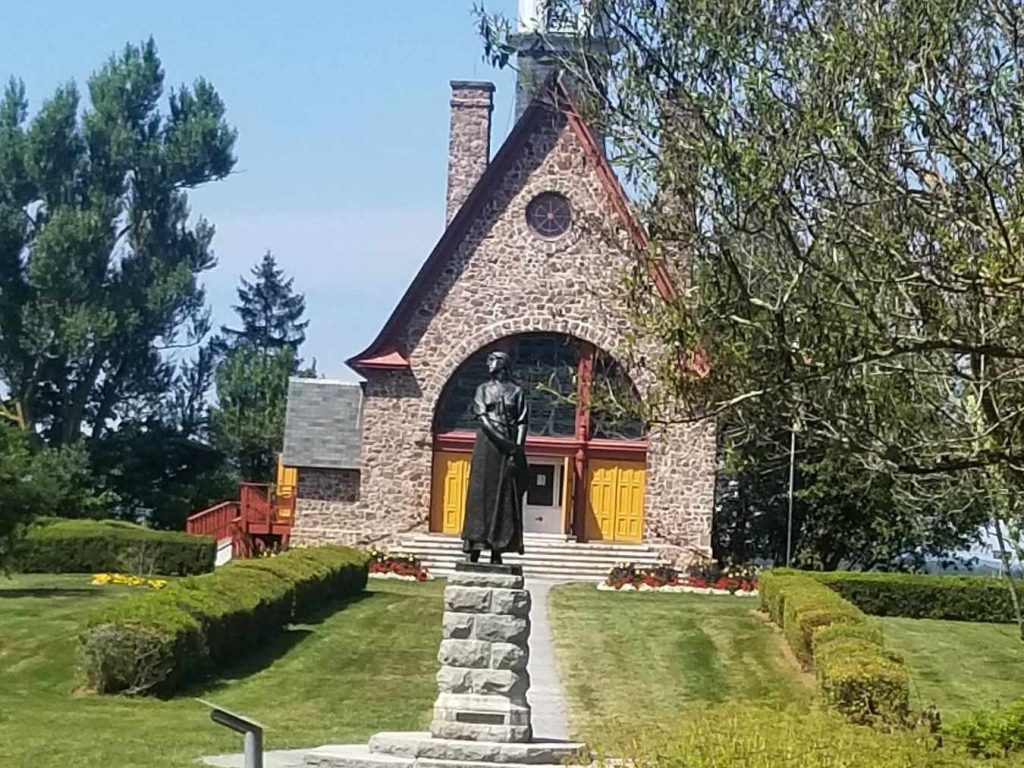
Although it’s Canada’s second-smallest province, it’s the most populous eastern province, with almost a million inhabitants. The First Nations referred to this territory as Mi’kma’ki, and it was much later that the province took the name Nova Scotia, in honor of a Scottish king. In the 18th century, Nova Scotia became part of an even larger territory, including parts of New Brunswick, Prince Edward Island, American Maine and even the Gaspé Peninsula. This was Acadia.
In the very first episode of this series, about Newfoundland, I mentioned the Seven Years’ War. Since this series is not intended to be an exhaustive history about the creation of Canada (but I’ll be offering one very soon), I’ll try to keep it short, without leaving out any major milestones.
Let’s recap. Since European colonization of North America and the expropriation of land from First Nations peoples, North America has been the scene of regular conflicts between France and England. And Acadia, a region which lies geographically between New France and New England, has not been spared. In 1713, Acadia officially passed into English hands. The Treaty of Utrecht was signed. France retained Prince Edward Island (formerly Île Saint-Jean), Cape Breton Island (formerly Île Royale) and some part of Acadia, which is likely to be present-day New Brunswick. The eastern part of Maine (now an American state) and the Gaspé Peninsula belonged to France as well. Pioneers, most of whom were of French origin and mostly Catholic, were governed by the Protestant English crown. In practice, however, they enjoyed a certain degree of autonomy – an autonomy they enjoyed for many decades. In the following years, trade facilitated cohabitation, but the Acadians who were used to their independence and had the most fertile lands, aroused jealousy. English governors began to resent the Acadians’ refusal to pledge allegiance to the crown, but somehow, peace prevailed.
In 1754, things took a turn for the worse: a new war broke out, known as the War of Conquest. It can either be seen as a prelude to the Seven Years’ War or can be considered as the first act of this major conflict, with North America as the stage. Once again, France and its allies, among which New France (which includes present-day Quebec, parts of Labrador and Manitoba, and Louisiana) and the Amerindians, were fighting England for colonial domination of North America. In 1755, the Acadian deportation began and marked the start of a dark period. A large part of the population settled in present-day Nova Scotia was arrested and sent to the Thirteen Colonies (today’s U.S. East Coast states), while others managed to reach Île Saint-Jean (Prince Edward Island), Île Royale (Cape Breton) or the rest of Canada. Resistance was also organized by the Mi’kmaq , who helped the Acadians to flee and hide. But the English attacked New France and the Fortress of Louisbourg (Île Royale), which fell in 1758. Acadian refugees were separated and sent back to France, New France or the United States.
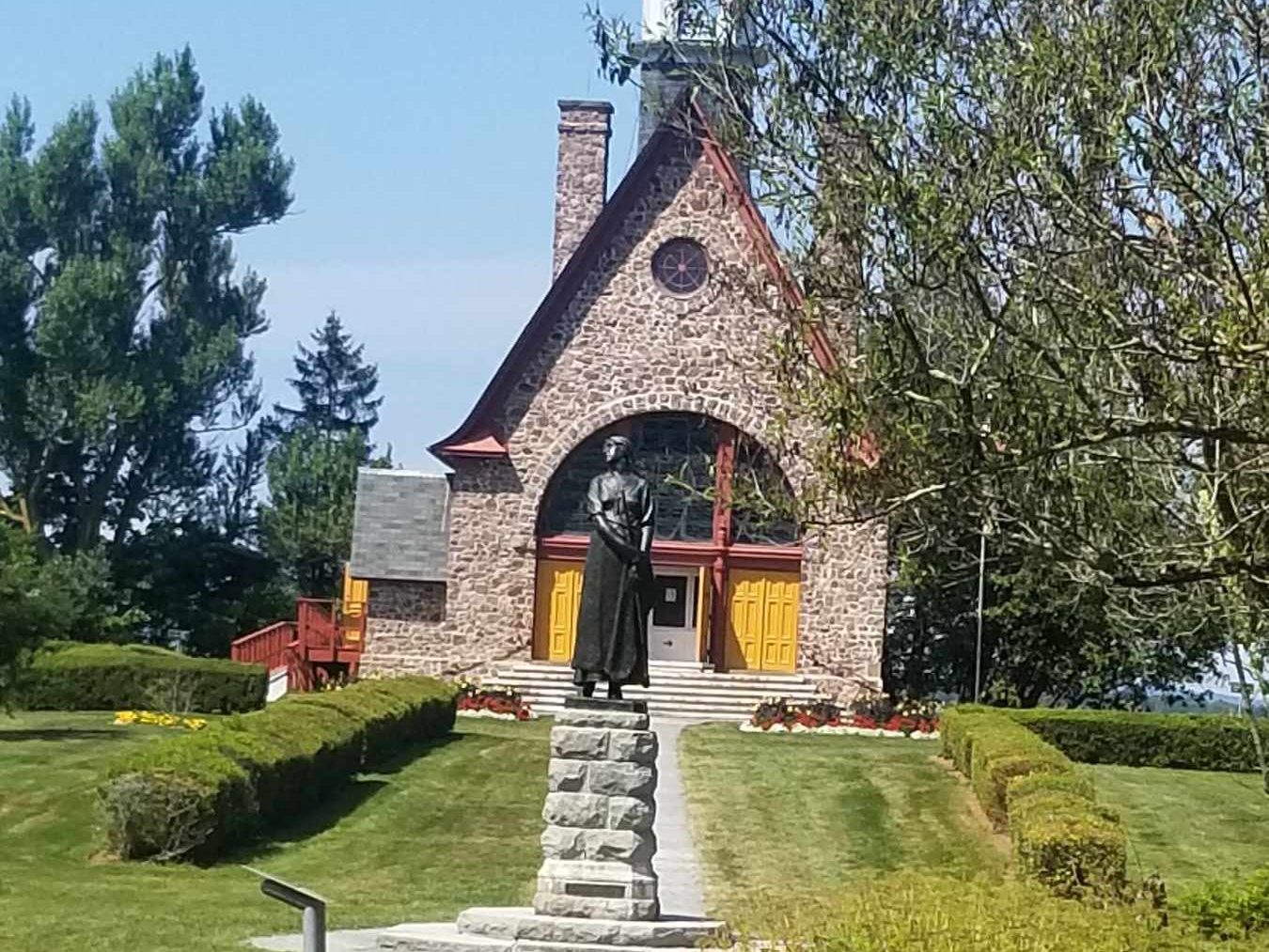
Today, the French-speaking communities of Nova Scotia and New Brunswick are Acadian, and while their history is intertwined with that of Quebec, they are nonetheless different. We must be careful not to equate all French-speaking communities in Canada with those in Quebec! The Fédération Acadienne de Nouvelle-Écosse is very active in representing culture in the province, which proudly asserts its dual identity. Numerous festivities celebrating Acadia take place throughout the year. There are numerous French schools throughout the territory and the development of Acadian culture is encouraged by the government.
In Nova Scotia, a ship to decorate license plates and 10-cent coins?
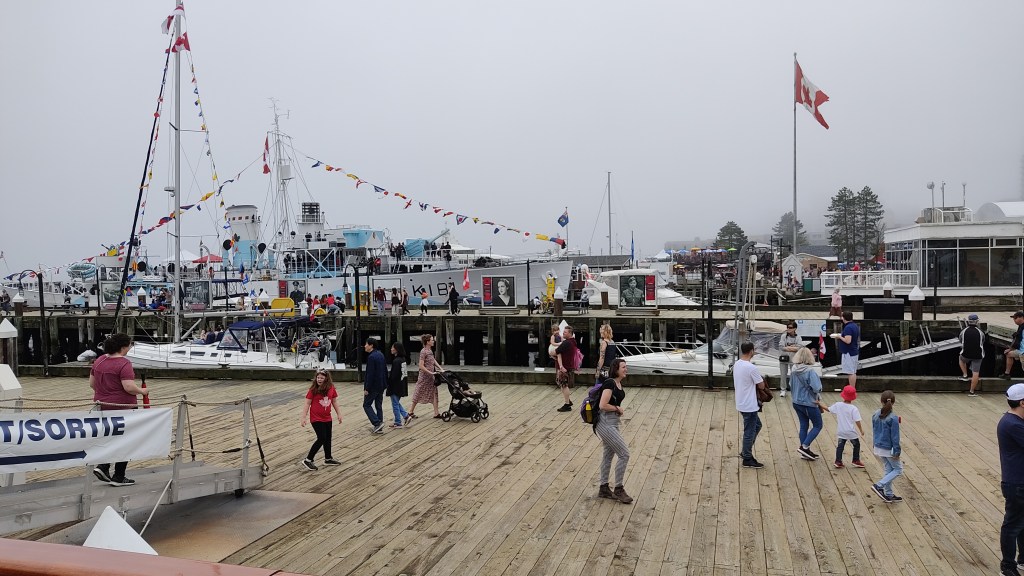
Located in southeastern Nova Scotia, the port village of Lunenburg is a UNESCO World Heritage Site. The old buildings have retained their original appearance, making them a striking example of the architecture of the early British colonies in North America. If you’ve visited the American East Coast, you’ll find many similarities with the village. However, it also owes its reputation to the Bluenose. This fishing sailboat, built here in 1921, became famous after taking part in a race between fishermen from the Maritime Provinces of Canada and the state of New England. For almost twenty years, she dominated the competition and took part in various meetings, both in North America and Europe. To pay tribute to him, a stamp bearing his effigy was created in 1929. Eight years later, the Royal Canadian Mint dedicated its 10-cent coins to him. If you’re still in any doubt about its fame, take a look at Nova Scotia’s license plates: the Bluenose is printed on them!
The biggest tides in the world are in Nova Scotia! (and New Brunswick)
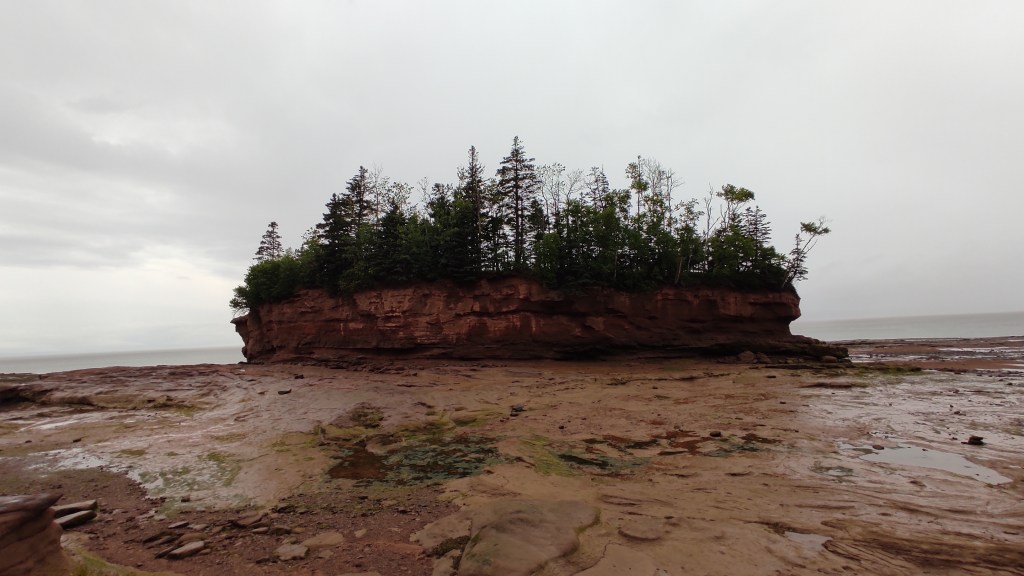
The Bay of Fundy is an inlet between New Brunswick and Nova Scotia. And it’s natural wonder! It is home to the world’s highest tides, which can reach 16 metres in height. Burntcoat Head, Nova Scotia, is said to be the site of the world’s highest tides, no offense to people of New Brunswick, I’m just sharing what I’ve been told. Burntcoat Head Park is open from May to October. Be sure to check the tide schedule to make the most of your visit. At low tide, walking on the seabed is an unusual experience that also allows you to observe the ecosystem up close. At high tide, you can navigate the bay in a kayak and access the islets, or dare a rafting session to experience the power of the tides! There are also numerous hiking trails to admire the views across the bay. I’m told that the Cap Split trail is a « must-do ». Let’s hear it!
| How do I get to Nova Scotia? As the easternmost province in the Maritimes, you have no choice but to cross into another province if you’re coming by road, or take a plane or ferry, if you’re coming from Europe, the USA, or the islands of Newfoundland and Prince Edward. By land: Nova Scotia borders New Brunswick, the only point of entry by land. To the north, on Cape Breton Island, Sydney is 6 hours from Fredericton, New Brunswick’s capital, and 12 hours from Quebec City, via the Trans-Canada Highway. Halifax, capital of Nova Scotia, is 10 hours from Quebec City and 4.5 hours from Fredericton. By air: Halifax is Nova Scotia’s international airport. Several airlines offer direct flights to Paris, London and other European cities. A bus connects the airport to downtown Halifax in 50 minutes, with daily service. By rail: Via Rail takes you from Halifax to Montreal. There are 10 stops before this final destination, ideal for discovering New Brunswick and Quebec’s Bas-Saint-Laurent region. By sea: Several ferry services take you to and from Newfoundland, Prince Edward Island, New Brunswick and even the state of Maine. Marine Atlantic links Sydney, Nova Scotia, to Port-aux-Basques, Newfoundland and Labrador, in 7 hours; and to Argentia, Newfoundland and Labrador, in 16 hours. From Yarmouth, you can reach Maine in 3h30. To Saint John, New Brunswick, you’ll need about 2.5 hours from Digby Harbour. To reach Prince Edward Island, take the ferry at Pictou for a crossing of around 1h15. Getting around In Nova Scotia, it’s hard to get around without a car. However, in Halifax, you’ll find a public transit system serving the municipality. For travel within the province or to New Brunswick and Prince Edward Island, you can use Maritime Bus services. In summer, it’s well worth exploring this province by bike. You’ll be delighted by its unique and diverse landscapes, from the Yarmouth region in the south to Cape Breton Island. |
To read in French, click here.

 Julia on a bike
Laisser un commentaire